Sign up for PayPal and start accepting credit card payments instantly.
Showing posts with label Inventions. Show all posts

Tuesday, May 31, 2011

Surprise! NASA unveils manned 'Deep Space Transportation System'

With the Space Shuttle's last ride right around the corner, there's a worry that NASA will be out of the manned spaceflight game for good, leaving it to the private sector instead. Well, walking back out onto the stage like a rockstar for an encore, NASA just screamed, "We're going into deep space, ya'll!" before diving into the crowd.

At the heart of NASA's "Deep Space Transportation System" is a manned crew-capsule-and-rocket combo the agency has tasked Lockheed Martin with cobbling together. Called the Multi-Purpose Crew Vehicle (or MPCV), NASA envisions the spacecraft taking a crew of four astronauts into deep space on missions lasting upwards of 21 days (so, no Mars landings just yet), and then splashing down in the Pacific Ocean just like in the old days. It's also billed as being "10 times safer during ascent and entry than its predecessor, the space shuttle."

The MPCV's crew capsule design takes a direct cue from Orion, which was to fulfill the same role for the Constellation program, an initiative that was canned after it fell behind schedule and over budget.

That four-person limit is down from what the Orion capsule was originally supposed to ferry around at six crew (and lower than the shuttles six to eight), and the craft also doesn't look like it'll be able to transport the same heavy loads the Space Shuttle did, such as deploying a satellite into orbit. What it can do is take that crew out of low earth orbit, meaning real-deal, manned outer space exploration and study. It can also dock with the International Space Station, making one wonder if, in the future, the MPCV might not just deploy from the ISS for multiple missions rather than always returning to Earth. Here's what we're looking at — you can see the capsule nestled in the chassis:

We've know that Lockheed Martin was working on a manned capsule for deep space exploration for a while now, but it's nice to hear it officially from NASA. Now, after the Space Transportation System — the formal name for the Space Shuttle program — ends, it sounds like the Deep Space Transportation System will be the agency's focus.

From NASA Administration Charles Bolden:

"We are committed to human exploration beyond low-Earth orbit and look forward to developing the next generation of systems to take us there. The NASA Authorization Act lays out a clear path forward for us by handing off transportation to the International Space Station to our private sector partners, so we can focus on deep space exploration. As we aggressively continue our work on a heavy lift launch vehicle, we are moving forward with an existing contract to keep development of our new crew vehicle on track."

NASA, via Physorg and Jalopnik

Read more »

Tuesday, March 1, 2011

Corning Gorilla Glass

Corning® Gorilla® Glass’s unique combination of beauty and toughness is creating exciting new possibilities for electronic devices.


A Day Made of Glass

Gorilla Glass features exceptional damage resistance to the scratches, drops, and bumps of everyday use. It’s thin, cool to the touch, and cleans easily – making it the perfect solution for sleek, seamless designs. And it’s sensitive enough to enable today’s most sophisticated touch applications.

Manufactured using Corning’s proprietary fusion process, Gorilla Glass features the same unparalleled surface quality as all of Corning’s high-technology display substrates.

Gorilla Glass is RF compatible, and its outstanding optical clarity makes it ideal for HD and 3-D television.

Corning Gorilla Glass is so versatile, we haven’t even scratched the surface of its design possibilities.


Cooking Up Tomorrows Kitchen
Corning® Gorilla® Glass. Tough, yet tasteful.


Gorilla Tough


Channel Surfing


Source: Corning® Gorilla® Glass
Read more »

Friday, February 25, 2011

Top 10 Sniper Rifles

A good sniper can damage enemy’s morale by taking out key personnel. They can stop a unit in its tracks. But for a good sniper a gun with an eagle sight, deadly impact and a monstrous fire power is essential. Today we have rounded up Top 10 Sniper Rifles of all times.

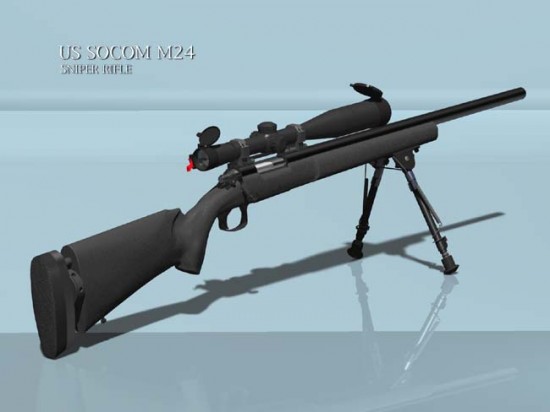
No 10. M24 (American)


Calibre: 7.62x51mm NATO (.308 win)
Operation: Bolt Action
Feed: 5-Round internal magazine
Weight: 12.1 lb (5.49 kg) empty without telescope
Length: 43in (1092mm)
Sights: 10×42 Leupold Ultra M3A telescope sight (Mil-Dots),
plus detachable emergency iron sights. (Redfield Palma International)
Barrel: 416R Stainless Steel, 24″ length, 1:11.2″ twist, 5 radial land grooves
Stock: HS Precision – adjustable length.
Max Effective Range: 800 meters (875 yards)
Expected Accuracy: 1 MOA with M118
.5 MOA with M118LR

The M24 Sniper’s Weapon System (SWS) represents a return to bolt action sniper rifles by the US Army. As in the USMC M40A1, the M24 uses the Remington 700 action, although the reciever is a long action made for adaptation to take the .300 Winchester Magnum round. The stock (HS Precision) is made of a composite of Kevlar, graphite and fibreglass bound together with epoxy resins, and features an aluminium bedding block and adjustable butt plate. A detachable bipod (Harris) can be attached to the stocks fore-end. The metal finish is powder coated for extreme durability


Top 10 Sniper Rifles A good sniper can damage enemy’s morale by taking out key personnel. They can stop a unit in its tracks. But for a good sniper a gun with an eagle sight, deadly impact and a monstrous fire power is essential. Today we have rounded up Top 10 Sniper Rifles of all times.
No 10. M24 (American)

M24 001 550x412 Top 10 Sniper Rifles
Calibre: 7.62x51mm NATO (.308 win)
Operation: Bolt Action
Feed: 5-Round internal magazine
Weight: 12.1 lb (5.49 kg) empty without telescope
Length: 43in (1092mm)
Sights: 10×42 Leupold Ultra M3A telescope sight (Mil-Dots),
plus detachable emergency iron sights. (Redfield Palma International)
Barrel: 416R Stainless Steel, 24″ length, 1:11.2″ twist, 5 radial land grooves
Stock: HS Precision – adjustable length.
Max Effective Range: 800 meters (875 yards)
Expected Accuracy: 1 MOA with M118
.5 MOA with M118LR

The M24 Sniper’s Weapon System (SWS) represents a return to bolt action sniper rifles by the US Army. As in the USMC M40A1, the M24 uses the Remington 700 action, although the reciever is a long action made for adaptation to take the .300 Winchester Magnum round. The stock (HS Precision) is made of a composite of Kevlar, graphite and fibreglass bound together with epoxy resins, and features an aluminium bedding block and adjustable butt plate. A detachable bipod (Harris) can be attached to the stocks fore-end. The metal finish is powder coated for extreme durability.

The rifle had a very quick development cycle as the US Army had decided it wanted to get snipers back into the US Army and was in the process of developing the B4 identifier and the school to award it. There was a major short fall of M21′s which was the standard sniper rifle at that point of time and the Army figured it would need 10,000 sniper rifles of which they didn’t have nearly that many M21′s. So a new sniper rifle was developed at the same time and it was done in a record 22 months. The Weapon System Matrix Manager for the M24 was Major John Mende and he explains that the long action actually had nothing to do with the ability to convert to a .300 Win Mag but was a product of that quick development time. The rifle was intended to be chambered in the .30-06 as the -06 was a type classified munition for the Army unlike the .300 WM at the time. They wanted to have a high power load for the .30-06 eventually developed. As development of the system was moving forward they discovered that there was not enough .30-06 ammo in a single lot in the Army’s inventory to test and develop the system so they quickly changed to the 7.62x51mm NATO (308 Win) and left the action the same as there was not enough time for the manufacturers of the stock and floorplate to make the change to short action. They also fully believed they would later do a product improvement update and convert all the M24′s to .30-06. The fact that they could convert them to .300 Win Mag was an unexpected benefit to the SF groups and was never actually designed into the system.

Read more »

Thursday, December 2, 2010

Dxg 5d7v Worlds First 3d Video Camcorder


With the world beginning to get to terms with HD equipment, it is only fitting that the world's first 3D enabled pocket camcorder has been launched. Courtesy of DGX, no glasses are required to appreciate the 3D imagery, utilising the 3.2-inch LCD camcorder display, on the included 3D 7-inch media player.

The camcorder also takes 2D images and video, but the 3d feature will be the persuasive selling point. The camcorder includes touch-screen technology and a remote control allowing you to view and control your video content and still images quickly and effortlessly.

Here are the technical specifications:

DXG 3D Media Player Specifications:

Dimensions: 8.39" (W) x 5.41" (H) x 0.94" (D)
LCD: 7" Parallax-Barrier Auto-Stereoscopic (Glasses-Free) TFT Display
Resolution: 800×480
Display Effects: Normal, black and white, Sepia, Lens Distortion
Video Format & Resolution: MPEG4, AVI, 720×480p at 30fps
Audio & Image Format: MP3; JPEG
Control Format: Touchable Keys, Remote Control
Audio & Video Output: AVOUT, Earphone Stereoscopic Output
Storage: Supports SD/MMC
Power Supply: 5V DC, 2A
Output Interface: USB 2.0


The DGX 3D camcorder is available from www.hammacher.com for $599.99.
Read more »

Sunday, November 7, 2010

Samsonite Luggage Trolley With Built In Scooter


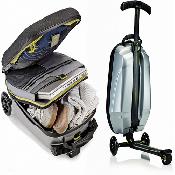
Dragging your luggage around with you is a mundane and painful task, especially on the way back from an action-packed, or relaxing holiday. Well now you can stop pulling around your luggage and wheeling it back home, thanks to this new invention. The Samsonite luggage bag is also a mini scooter, allowing you to scoot around with your luggage safely tucked away.

Just think about when everyone else is carrying around their luggage, whilst you just jump on your scooter and fly by them, shortening your trip back home, and also making it a little more fun! It's a simple idea, but an extremely effective product, which we think will prove immensely popular, so look out in airports near you for scooters flying past you from all directions.

The scooter also folds up, allowing you to use it as a normal luggage carrier, but why minimise the fun?! The bag itself is rather small, so you may very well be able to use this for your on-board luggage bag.

Details on where this product is available and how much the scooter luggage bag will be are currently unknown, but expect them to hit the market pretty soon!
Read more »

Sunday, October 31, 2010

12-yo Girl Prevents Kidnapping By Pretending iPod Touch Is a Phone


This week in Stanton, Delaware, a 12-yo girl was confronted by a man driving a white van. He told her to get in. She held up her iPod Touch and said she'd dialed 911. That may have saved her life.

The girl was accosted in the late afternoon this Wednesday by a suspect who's described as a white male, 35-45 years of age, dark hair, crew cut. And her quick thinking caused him to flee the scene immediately.

Thank goodness she thought of that in time. And—as Cult of Mac points out—what a ringing endorsement for iPod Touch VoIP apps. If she had read our primer on turning your iPod Touch into a hacked Verizon iPhone, she actually could have called for help—although not 911. Meanwhile, all not-creepy guys who happen to own vans are shaking their heads in disappointment.

Source: ABC News
Read more »

Friday, October 29, 2010

Apple's Thinking about Scratch Resistant and Durable Gadget


Based on an Apple patent application, it seems that the company is contemplating ways to make gadgets more scratch-resistant and durable with cheap nitride coatings on top of stainless steel exteriors.

The nitride coatings would not only be low-cost, but they would also leave your gadgets looking great:

In addition to providing a durable, hard surface that is both scratch and impact resistant, the nitride layer allows for the natural surface color and texture of the underlying stainless steel to remain visible to the user. It is this natural surface color and texture of the stainless steel that adds to the aesthetically pleasing appearance of the consumer electronic product, thereby enhancing the user's overall experience.

Source: Apple Insider
Read more »

Sunday, September 26, 2010

The Most Destructive Weapons Ever Made

We all know that imagination has no limits. If you can imagine of something great, you can very well achieve it too. Intelligence is something that has led the human civilization to grow proudly and continuously (at least in the field of technology). When this growth is about the human intelligence spent on producing the weapons of mass destruction, all “sane beings” encounter a similar negative feeling. But, who knows, may be ‘War’ isn’t the answer to all the problems in future.

Here are the clippings of some of the most powerful and meticulously crafted weapons ever disclosed to the public:

Invisible Tank (British Technology)


Barrett M107 .50 Caliber sniper rifle


AA-12. World's deadliest shotgun!


Read more »

Sunday, June 27, 2010

Many iphone 4 users are complaining about numerous issues especially about the problem with the signal reception when the phone is held in the most obvious manner. Well, Steve Jobs has an apt answer, suggests users to not hold phones that way. Duh!

iPhone 4 was launched On June 24, the day when millions of desperate users finally got their hands on the new iphone, but has left many of them disappointed.

* The new iphone screen is reported to have ugly white and yellow patches which is said to get fixed automatically with few days of usage.

Somebody on AppleInsider forum said:

Apple is using a bonding agent called Organofunctional Silane Z-6011 to bond the layers of glass. Apparently, Apple (or more likely Foxconn) is shipping these products so quickly that the evaporation process is not complete. However, after one or two days of use, especially with the screen on, will complete the evaporation process and the yellow “blotches” will disappear. How do I know? I was involved in pitching Z-6011 to Apple.

* Apple claims that the phone is highly durable , but it miserably failed the drop test leaving the phone’s glass screen shattered.

The Retina display glass is chemically strengthened to be harder, more scratch resistant, and more durable than ever.


* There is another issue has been reported and is all over the blog-sphere that the phone loses it’s signal strength when the phone is held in the way majority of the cell phone users hold. This is actually very annoying because no matter what all the functions modern phones are capable of. A phone is a fail if it does not fulfil the primary feature of making and receiving phone calls. I’m not saying iphone 4 is a failure. All i’m saying is the cover up answer made by Steve jobs for the signal reception problem was highly absurd and something that has left users with an ‘exclamation mark’ in their mind.

Steve Jobs covers up the issue by saying:

Gripping any mobile phone will result in some attenuation of its antenna performance, with certain places being worse than others depending on the placement of the antennas. This is a fact of life for every wireless phone. If you ever experience this on your iPhone 4, avoid gripping it in the lower left corner in a way that covers both sides of the black strip in the metal band, or simply use one of many available cases.

This is totally in contrdiction with what is shown in the phone’s advertisements:

Seriously, who will fall for such cover up? Lets hope Apple comes up with a “real solution” before it’s too late. If the the reception problem is software related then, it will be fixed very soon but if it’s hardware based then it will be interesting how Apple will deal with it.

Multimedia and Data Via: Gizmodo, iFixYouri, Reddit, AppleInsider Forum and Engadget
Read more »

Wednesday, March 10, 2010


Rocket man flies on jet-powered wings

Martin Aircraft Company, in Christchurch, New Zealand, aims to make 500 packs a year which will sell for around £50,000.

The 200 horsepower dual-propeller packs are the brainchild of inventor Glenn Martin who unveiled his machine for the first time in July last year.

Because it weighs less than 254 pounds (115kg) the jet pack does not require a pilot's licence. It is capable of travelling 30 miles in 30 minutes on a full tank of fuel.

And recent tests have seen the newest model reach heights of up to 2,400 metres and top speeds of 60mph.

But only now has sufficient investment been found for the company to begin production of the craft, which will also begin at an undisclosed site outside New Zealand.

Martin Aircraft Company chief executive Richard Lauder said the pack could be perfect for the emergency services, private users and even the military.


He said: "This could be life-saving stuff.

"For us this is an excellent commercial step.

Mr Lauder would not identify the partner other than to say it was an international aircraft company.

The joint venture would be run through a newly created company.

The aircraft company would have a controlling 51 per cent stake. Both Mr Lauder and jet pack inventor Glenn Martin would be directors of the new company.
Read more »

Saturday, February 6, 2010

Five technology trends to watch in 2010

Technology innovation continued its ruthless pace in 2009, despite the economic headwinds. Now it’s time to turn our sights on 2010, where there are going to be some really interesting things to keep an eye on. Let’s count down the five tech trends that should be on your radar for 2010.

5: The consumerization of IT

This is something we’ve been talking about for a couple years but the trend is accelerating. We see it in employees using their own personal laptops and devices for work tasks and using freely available Web tools to help them get their jobs done. This can create a whole host of problems for IT, but in most cases you don’t want to squash it altogether. What you’ll need is a policy that gives employees guidance on how and when these types of tools can and can’t be used, and why.

4: Desktop virtualization

TechRepublic recently asked its CIO Jury about desktop virtualization and 75% said they weren’t interested. However, the 25% that ARE interested are very enthusiastic about using it to cut costs and simplify IT support. In 2010, it’s going to interesting to see if this trend gains momentum and becomes more mainstream, or if it’s simply relegated to a few niche scenarios and industries.

3: E-readers

While most of the buzz around e-readers is centered around consumers readings books and newspapers, there are also a new set of e-readers that will hit the market in 2010 that are aimed at helping businesses streamline the meetings that require huge stacks of paper and bring more multimedia capabilities to business documents. more ammunition on why you should follow this trend, see Jack Wallen’s article “10 reasons why e-readers make sense in the enterprise.”

2: WAN acceleration

I consider WAN acceleration to be one of the best kept secrets in the IT and business worlds. By caching big files and often-used documents, WAN acceleration appliances and software can save big money on bandwidth costs and give your branch offices and remote workers far better performance on their business applications. Companies like Riverbed are even taking WAN acceleration a step further and using it to help speed up hosted cloud applications by partnering with major SaaS providers. All of this makes WAN acceleration one of the hottest projects in IT right now, because it can offer fast ROI and immediate productivity benefits.

1: Berries, apples, and robots

What do these three things have in common? Well, of course, we’re talking about smartphones with BlackBerry, Apple iPhone, and Google Android. These are the three smartphone platforms that have the most momentum heading into 2010. With smartphones becoming standard tools for more and more business workers, it’s going to be
important to watch which devices users gravitate toward, which platforms offer IT more security and manageability features, and which ones developers latch on to as the best place to build new applications for business users.
Read more »

Saturday, January 23, 2010

Fan Less (No Blades...No Buffeting)

Fan less as it is, it can generate accelerate air up to jet like speeds. Your mom would really have a bad hair day if you point this at her using the maximum speed. This fan less bad boy has innovated how we use fans. There are no blades anymore, the air rushing through is uninterrupted and you can feel it. It is much safer knowing that it has no fans. And, its a new technology.


Something we can look too in 2010. More will be using this new hybrid of fan less fans. I don’t think they even call this fan less fans, that’s just how I want to call it, they call it the air multiplier.


* See the difference between choppy and smooth airflow *


Air Multiplier

I am thinking about getting this bad boy, but it cost around 300$-330$ and they don’t ship it to Philippines yet. I wish I could find a way to be a supplier for this here in Cebu, Philippines. I will try to contact this company if I can order 1 and have it shipped here in Cebu, Philippines. Anybody who wants to purchase this and put it in an apartment or just at home would really appreciate this new gadget.

How it works

Air is accelerated through an annular aperture. This creates a jet of air that passes over a 16° airfoil-shaped ramp, channeling its direction.


Other advantages

No blades means the Dyson Air Multiplier™ fan is safe and easy to clean. It also has touch-tilt, 90° oscillation and dimmer-switch power control.


For more details on this gadget you can view it to manufacturer site. Please click it here.
Read more »

Thursday, January 14, 2010

Robotic Exo-skeleton of Japan Gives Super-human Strength

This is the Power Loader, a robotic exoskeleton, developed by Japanese company Activelink. It may soon be giving humans strength that would make Superman envious.

Developed to assist construction workers, the Power Loader looks like something out of a sci-fi thriller.

Users lock their feet into the legs of the power loader using bicycle shoes and then grab sensors that can measure the direction, rotation, and force of pressure that a user applies and can translate that into the machine’s movement.

The force that a user applies is then multiplied to allow users to work in ways that they wouldn't be able to normally.

[Go Shirogauchi, Vice President, Activelink]:
"First of all, we hope to 'power up' human's arms and legs. We are looking to make it possible to work while carrying a hundred kilos."

The power loader is designed to be able to carry 220 pounds, or about the weight of one section of a disassembled crane piping.

In order to lift such heavy weights, the power loader multiplies the operator’s strength.

[Go Shirogauchi, Vice President, Activelink]:
"The amount of strength multiplication can be decided by changing settings in the software. With the current settings, a user's strength is multiplied by a factor of about 100."

While some software and hardware needs to be changed before the power loader is ready to work, Shirogauchi (pronounced Shiro-ga-oo-chi) and his team have set 2015 as the goal for putting the power loader out into the real world.
[Go Shirogauchi, Vice President, Activelink]:
"One target that we have is that by 2015, we hope to conduct an actual trial in the construction industry. We plan to conduct it in a way that actually helps people at a real construction site."

If the tests in 2015 go well, power loaders could soon be available do everything from loading containers to logging.
Read more »

Saturday, October 3, 2009

SAMSUNG will be launching new Cellphone with 12Megapixel Camera

The new Samsung W880 ups the ante with a world's first 12 megapixel camera with 3x optical zoom. Featuring a hardware Mode dial and a real zoom lever it does feel like a real camera and you may find yourself struggling to find the mobile phone under the digicam skin. Now while W880 is South Korea bound only, it's enough to give us a taste of what's coming in the shape of the rumored Samsung M8920, which should make it our way sometime next year - but with Wi-Fi and GPS on board.


Designing a mobile phone (or any other portable gadget for that matter) is a balancing act - the engineers must juggle between cost, size and features, all the while being limited by the current state of technology.

Say cost doesn't matter - that still leaves only so much that can reasonably be crammed into a mobile device. Progress is made, technology advances, which results in things getting cheaper, smaller and with more features. And quite soon, things that seemed impractical a few years back can now be released as a consumer device.

This is how the Samsung W880 AMOLED 12M came to be - it contains all the mechanical elements of a point-and-shoot camera, but still has enough room left for the phone parts. It's not the first phone to achieve that but it's the first 12-megapixel one and the added 3x optical zoom and xenon flash pretty much put it on par with a typical point-and-shoot camera.

The Samsung W880 has some high-end imaging functions too - tracking touch autofocus, 720p@30 fps video recording, 3.3" big AMOLED capacitive touchscreen with WVGA resolution. That's not something you see every day on a cameras and it's top notch in mobile phone terms. Even the degree of control over how a photo is taken beats out consumer cameras, let alone cameraphones.

Now, keep in mind that the we're previewing a prototype here and it's a prototype of a phone meant for the South Korean market only and although it has tri-band GSM and support for UMTS, those are meant for roaming only - the AMOLED 12M is for South Korea and South Korea only.

So, why bother with a preview then? Well, there's a global version coming in the beginning of next year and that might actually land in a store near you. It will look just the same but will drop the T-DMB TV receiver, which has little use outside of South Korea anyway, swapping it for the more practical Wi-Fi and GPS. Supposedly, the global GSM version will be allegedly called Samsung M8920, but that has yet to be confirmed by an official source...For the complete specification of this Cellphone you can view it here.
Read more »

Friday, September 4, 2009

Sassy Solar Powered Bra

TOKYO - Ladies, take your battle for the environment a little closer to your heart with a solar-powered bra that can generate enough electric energy to charge a mobile phone or an iPod.

Lingerie maker Triumph International Japan Ltd unveiled its environmentally friendly, and green colored, "Solar Power Bra" on Wednesday in Tokyo which features a solar panel worn around the stomach.

The panel requires light to generate electricity and the concept bra will not be in stores anytime soon, said Triumph spokeswoman Yoshiko Masuda, as "people usually can not go outside without wearing clothes over it."

But it does send the message of how lingerie could possibly save the planet, Masuda said, adding that the bra should not be washed or sunned on a rainy day to avoid damaging it.

Being eco-friendly is now fashionable in Japan, and the "Solar Energy Bra" follows the company's other green-themed undergarments that include a bra that turns into a reusable shopping bag and one that featured metal chopsticks to promote the use of reusable chopsticks.

"It is very comfortable and I can really feel involved in eco-friendly efforts as well," model Yuko Ishida said.
Read more »

Wednesday, August 26, 2009


High-Technology Fashion Today


There's something sexy about wearable tech.

Okay, maybe not sexy in the traditional sense of "likely to win you favour with the opposite sex". Perhaps more sexy in the sense of "likely to boost your ubernerd street cred in the eyes of your peers, but perhaps not the kind of thing you'd wear to the mall in case you ran into someone you went to high school with". You know, that kind of sexy.

Anyway, the latest bit of wearable tech to float my boat is the awesome Wearable 39 key MIL-461 Specification Keyboard (pictured). Not exactly a sexy name, but this isn't some el cheapo piece of junk you'd buy from the kind of online retailer that sells USB missile launchers. This thing sells for AU$980 and is actually built to meet military standards.

I haven't seen the keyboard actually on sale yet, it's only just been announced in Australia by tech distributor Interworld Electronics - which isn't a retailer so it's not likely to sell you just one. The keyboard has been dubbed the AK-39, a sexy name that's far more likely to appeal to those looking to engage in a little backyard black ops.

According to Interworld; the AK-39 is; '"Constructed from high-impact ABS plastic and Industrial Silicon Rubber... designed to meet MIL-461 standards and intended for use in very harsh electro magnetic interference environments."

"The AK-39's small-footprint design features essential components for military and public safety applications, including an integrated Force Sensing Resistor (FSR) pointing device with left- and right-click functionality, and adjustable green LED backlighting that is also available in a night vision-compatible configuration. Designed with gloved users in mind, the AK-39's snap-on faceplate eliminates accidental key strokes and can be easily removed to clean the pad."

Forget public safety, this is the ultimate accessory for those who want to go creeping around Mission Impossible-style, doing their own theme music as they work towards world domination. Wearing night googles would be icing on the cake.

What Interworld doesn't make clear is that the AK-39 is actually a USB device, not wireless. This makes sense when you consider it's designed for "very harsh electro magnetic interference environments", but it seriously limits the AK-39's usefulness.

You can run around with the AK-39 strapped to your arm and dangle from wires like Tom Cruise... as long as you have a computer strapped to your back. Pity. USB makes it a very niche product. The option of Bluetooth or even RF would be a whole lot more useful, although then obviously vulnerable to jamming from your enemies - such as that kid around the corner who builds his own fuzz busters with spare parts from Tandy.

To be honest, I think netbooks and smartphones have almost killed off the idea of a wearable computer. Today I could achieve more with my iPhone or an Eee PC than I ever could with the concept wearable computers of days gone by, especially considering phones and netbooks feature a built-in display, mic, speaker and power source. It would be cool if you could clip a smartphone to the top of the AK-39, so you could use it as an external keyboard - although then your mum might ring you to come home for dinner before you'd finished your mission.

The AK-39 doesn't seem all that practical for most situations, but damn it looks sexy. If nothing else, you could use it to launch your USB missiles.

What do you look for in wearable tech and how would the AK-39 assist your plans for world domination?
Read more »

Tuesday, August 18, 2009

Robotics Today

A Day in the life of a Robotics

Robotics engineers design robots, maintain them, develop new applications for them, and conduct research to expand the potential of robotics. This is a rapidly developing field, with advances in computing constantly opening up new possibilities for robotics applications. Manufacturing, the first industry to invest heavily in robotics, remains the primary employer in the area, but recent years have seen rapid expansion of research and engineering in robots for such applications as agriculture, mining, nuclear power-plant maintenance, and a variety of other fields. The profession offers jobs for a wide range of temperaments. Visionary robotics engineers can work designing experimental mobile robots, with applications ranging from medical and military uses to designs aimed at creating vehicles capable of piloting themselves on other planets. More down-to-earth jobs involve designing new production-line robots, often with programmable arms, and maintaining and upgrading older production-line installations. Somewhere in between lie those engineers designing and producing robots for expanding but tested fields, such as self-piloting crop harvesters and automated nuclear-safety equipment. Robotics engineers must have the same disciplined attention to detail required of all engineers, but the relative novelty of the field puts an additional premium on creativity. It’s a safe bet that twenty years from now, robots will be employed in a vast range of new activities. The engineers who can best anticipate needs which can be successfully filled by robots, and who can work effectively in engineering teams to develop them, will be extremely successful in the field.


Read more »


GSM Cell Phones and Their Benefits

GSM world cell phones are the talk of the industry. Many businesses and individuals are looking into this latest technology especially now we have the 3G. So for the novice, what is GSM? Simply put, GSM (Global System for Mobile communications: originally from Groupe Spécial Mobile) is the most popular standard for mobilephone in the world. Its promoter, the GSM Association estimates that 80% of the global mobile market uses the standard. GSM is used by over 3 billion people across more than 212 countries and territories. Its ubiquity makes international roaming very common between mobile phone operators, enabling subscribers to use their phones in many parts of the world. GSM differs from its predecessors in that both signaling and speech channels are digital, and thus is considered a second generation (2G) mobile phone system. This has also meant that data communication was easy to build into the system. GSM is a digital cellular technology that is open and can transmit voice and data. Where GSM differs from older technology is that the system divides each channel into eight time-slots which allows the same phone to be used around the world.

Using these cell phones gives you access to the same services on your cell phone whether you are in the United States or Europe or anywhere else there is a signal. You can use the same telephone number and have the same access as you would in your hometown in any of more than 200 hundred countries.

So why is this important? The GSM world cell phones give you the ability to have one phone and travel around the world with it. You do not need to worry about changing SIM cards or other elements of your phone, or have to take the dreaded second cell phone with you.

Travelers like things made as easy as possible. The bane of many travelers’ existence has been the need to have two or more cell phones with them when they travel and then try to guess which cell phone will work in which country. This new technology allows you to take only one cell phone with you and have confidence that it will work, including all the features you need, no matter where you travel to.

Sure there are some remote areas where the GSM world cell phone will not work, however, for the vast majority of travelers these cell phones will be the only cell phone they need. It is easy to see why travelers are rejoicing over this new technology. The only thing they have to worry about is having the right electrical adapter to chair their world phone.

As you search online for the best cell phone, you will undoubtedly be impressed with the GSM world cell phones. For anyone who travels out of the country, the practicality of these phones cannot be overstated. Priced right and with a good selection of models to choose from, it is only a matter of time before world cell phones become more popular than traditional cell phones.

The world is a big place but just got a little smaller thanks to the newest technology that has brought us GSM world cell phones.
Read more »

 
Powered by Blogger